A visual guide • 1928–1931
From open roadsters to hardworking delivery vans and heavy trucks, Ford offered an extraordinary range of Model A and Model AA bodies. Use the pictures below to compare the main shapes and learn what sets each one apart.
This guide focuses on U.S. body-style families. Year changes, Standard and Deluxe trim, Briggs and Murray construction, cab styles, wheelbases, and equipment variants are grouped where they share a basic body shape. Some AA bodies continued into 1932.
Model A Passenger Cars
Open and closed passenger bodies, including formal and taxi-service designs.

Alf van Beem · CC0 · Photo details
Roadster — Standard & Deluxe
40-A / 40-B
Two-door open car with a folding top and removable side curtains. Deluxe versions added richer trim; a rear trunk or rumble seat completes the body.

Lars-Göran Lindgren Sweden · CC BY-SA 3.0 · Photo details
Standard Phaeton
35-A / 35-B
Four-door touring body with front and rear seating, a folding fabric top, and side curtains. Its open sides distinguish it from a closed sedan.

Alf van Beem · CC0 · Photo details
Deluxe Phaeton
180-A
A distinctive two-door, five-passenger open body. Longer doors and a more luxurious interior distinguish it from the four-door Standard Phaeton.

Alf van Beem · CC0 · Photo details
Standard Coupe
45-A / 45-B
Compact closed two-door body with one main seat and roll-up door windows. The rear deck holds a trunk or, on equipped cars, a rumble seat.

Lars-Göran Lindgren Sweden · CC BY-SA 3.0 · Photo details
Deluxe Coupe
45-B Deluxe
The familiar closed coupe shape with upgraded trim and interior appointments. Equipment changed during production; a rumble seat alone does not establish Deluxe specification.

Lars-Göran Lindgren Sweden · CC BY-SA 3.0 · Photo details
Special Coupe
49-A
An early coupe with artificial-leather covering extending over the roof and rear upper body. Quarter windows remain visible within the covered rear section.

Douglas Wilkinson / RemarkableCars.com · Attribution license · Photo details
Business Coupe
54-A
A fixed-top coupe with a fabric-covered roof and no ornamental landau irons. Early examples have blind quarters; later examples gained oval quarter windows.

Lars-Göran Lindgren Sweden · CC BY-SA 3.0 · Photo details
Sport Coupe
50-A / 50-B
Its fabric roof and decorative landau irons suggest a convertible, but the top does not fold. Roll-up door windows and a rumble seat complete the sporting appearance.

Alf van Beem · CC0 · Photo details
Tudor Sedan — Standard & Deluxe
55-A / 55-B
Two-door enclosed sedan with a rear seat and large side windows. Front seats provide access to the back; Deluxe versions retain the same basic body shape.

Alf van Beem · CC0 · Photo details
Early Fordor — Leatherback & Steelback
60-A / 60-B / 60-C
An early four-door, blind-quarter sedan. Leatherback versions have covering over the roof and upper rear body; the Steelback version uses exposed metal at the rear.

Alf van Beem · CC0 · Photo details
Standard Fordor — Three Side Windows
165-A / 165-B / 165-C / 165-D
Four-door enclosed body with a rear quarter window behind each rear door. Briggs and Murray bodies differ in details while sharing this practical sedan layout.

Lars-Göran Lindgren Sweden · CC BY-SA 3.0 · Photo details
Fordor — Blind Quarter
170-A / 170-B
Four-door sedan with a solid rear quarter behind the rear doors. The lack of quarter windows makes it easy to distinguish from a three-window Fordor.

Lars-Göran Lindgren Sweden · CC BY-SA 3.0 · Photo details
Town Sedan
155-A / 155-B / 155-C / 155-D
An appointed four-door sedan with passenger comfort emphasized in its interior trim. Identify the body and equipment together rather than relying only on exterior accessories.

Lars-Göran Lindgren Sweden · CC BY-SA 3.0 · Photo details
Slant-Windshield Fordor & Town Sedan
160-A / 160-B / 160-C
The 1931 sedan family uses rearward-sloping windshield pillars. Standard Fordor, Town Sedan, and Deluxe blind-quarter versions share this later design direction.

Alf van Beem · CC0 · Photo details
Cabriolet
68-A / 68-B / 68-C
A two-door convertible with a genuinely folding top and roll-up door glass. This weather protection separates it from the roadster; the later 68-C has a slant windshield.

Alf van Beem · CC0 · Photo details
Victoria
190-A
A compact two-door sedan with a slant windshield, rear seat, and a rounded, projecting rear body. Both leatherback and steelback roof treatments were offered.

Lars-Göran Lindgren Sweden · CC BY-SA 3.0 · Photo details
Convertible Sedan
400-A
Two-door, five-passenger convertible sedan with a folding roof and roll-up windows. Often called the “A-400,” it combines sedan seating with an open-air body.

Aaron Headly · CC BY-SA 4.0 · Photo details
Town Car
140-A / 140-B
Formal chauffeur-style body: the driver sits in an open front compartment while rear passengers have an enclosed compartment. It is distinct from the ordinary Town Sedan.

Alf van Beem · Public domain · Photo details
Taxicab
135-A / 135-B
A purpose-built commercial passenger body for taxi service. Its rear passenger compartment and service-oriented fittings distinguish it from a family sedan used as a taxi.
Model A Commercial Bodies
Light commercial vehicles on the Model A chassis. A pickup cab and its cargo box have separate Ford body-type numbers.

Aaron Headly · CC BY-SA 4.0 · Photo details
Station Wagon
150-A / 150-B
A wood-bodied passenger-and-cargo vehicle with several rows of seating. Commonly called a “woody,” it served hotels, depots, estates, and businesses as well as families.

Alf van Beem · CC0 · Photo details
Open-Cab Pickup
76-A / 76-B cab; 78-A / 78-B box
Light pickup with a roadster-style cab, folding top, and open sides protected by curtains. Its cargo box is separate from the passenger compartment.

Vauxford · CC BY-SA 4.0 · Photo details
Closed-Cab Pickup
82-A / 82-B cab; 78-A / 78-B box
Light pickup with an enclosed cab and roll-up windows. Cab design and cargo-box dimensions changed during production, including the later wide pickup box.
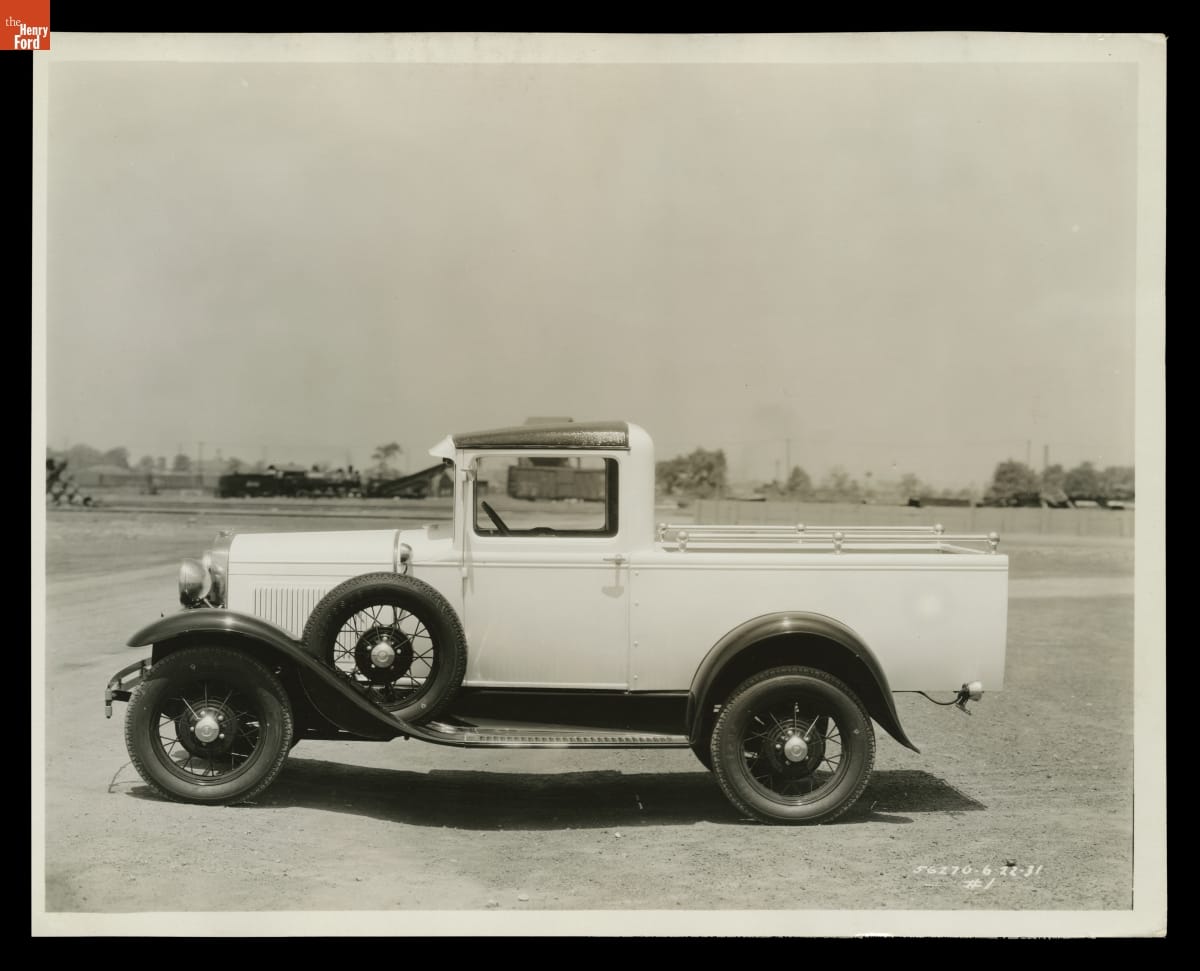
Period Ford photograph · Archive source
Deluxe Pickup
66-A box with Deluxe closed cab
A rare styled pickup whose smooth-sided box follows the cab’s body lines. Passenger-car-style brightwork gives it a more polished appearance than the standard work truck.

Vauxford · CC BY-SA 4.0 · Photo details
Panel Delivery
79-A / 79-B
An enclosed light delivery vehicle with solid cargo sides and rear loading access. Tall, uninterrupted panels provided space for business lettering and protection for goods.

Alf van Beem · CC0 · Photo details
Deluxe Delivery
130-A / 130-B
A lower, car-like enclosed delivery body with a more finished appearance than the tall Panel Delivery. Businesses could advertise on its solid rear side panels.

Alf van Beem · CC0 · Photo details
Drop-Floor Panel Delivery
225-A
A light delivery body with a lowered cargo floor to increase usable interior height. Its tall rear compartment emphasizes load space rather than passenger accommodation.
Period Ford photograph · Archive source
Special Delivery
255-A
A wood-bodied delivery vehicle related to the station wagon. The body is arranged for commercial cargo service rather than the wagon’s normal passenger seating.

Alf van Beem · CC0 · Photo details
Town Car Delivery
295-A
A formal delivery body with an open chauffeur compartment and enclosed rear cargo area. Its specialized appearance suited businesses seeking an upscale delivery vehicle.

DestinationFearFan · CC BY-SA 4.0 · Photo details
Postal / Mail Van
Special-purpose coachbuilt body
Postal fleets used purpose-built enclosed bodies on Ford chassis. Body makers and specifications varied; these vans should not automatically be identified as ordinary Panel Deliveries.
Model AA Trucks & Commercial Bodies
The AA was the heavier truck in the family. A cab could be paired with different work bodies; Ford-supplied bodies and specialist coachbuilt examples are shown below.

Alf van Beem · CC0 · Photo details
Platform / Flatbed
88-A / 185-A / 185-B / 187-A
A flat cargo deck behind a separate cab. Platform dimensions and wheelbase varied; the deck could carry bulky loads or accept racks and other equipment.

Stephen Foskett (Wikipedia User: sfoskett ) · CC BY-SA 3.0 · Photo details
Stake / Rack Truck
Platform body with stake equipment
Removable upright stakes and side racks enclose the flat platform. Their open construction retains cargo while allowing access for loading and unloading.
Period Ford photograph · Archive source
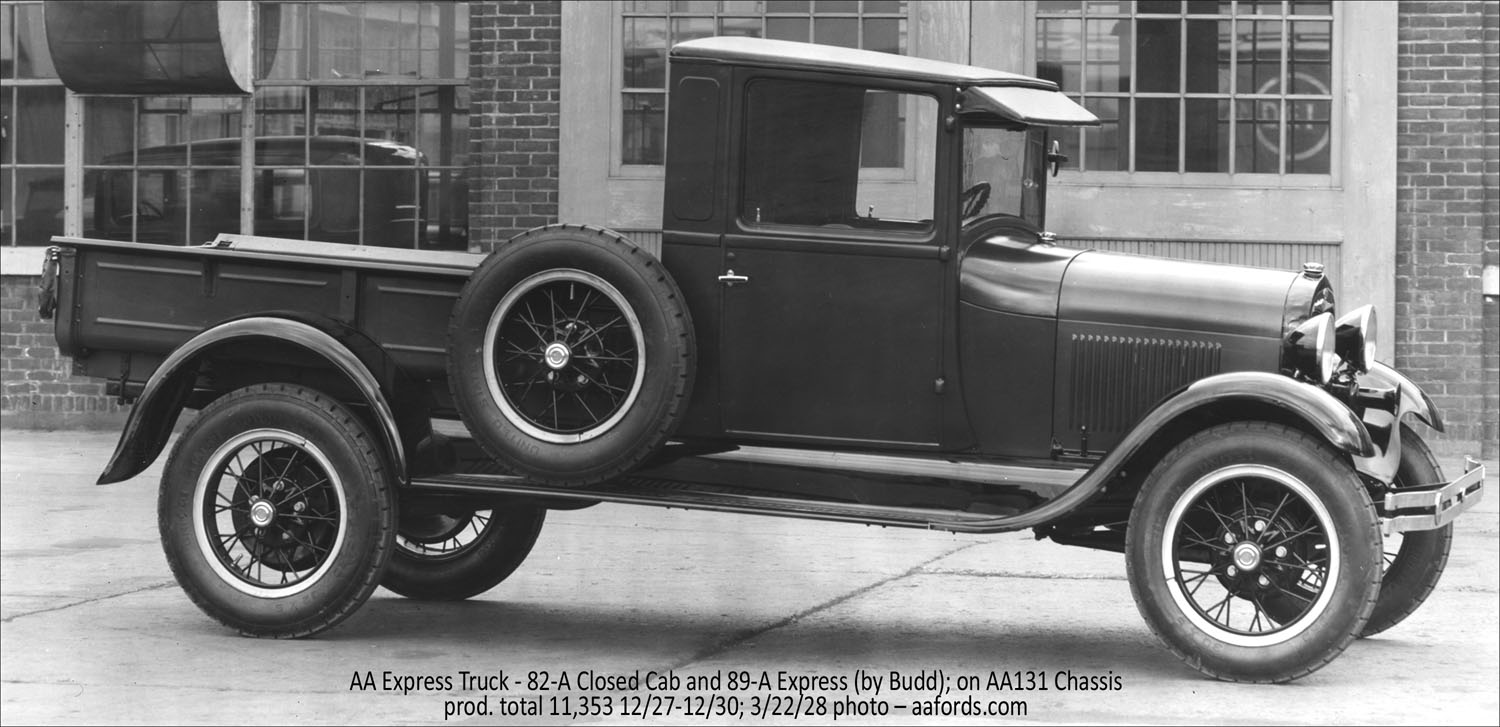
Express Truck
89-A / 195-A / 197-A
A pickup-like cargo body with low permanent sides and a tailgate, built for the heavier AA chassis. Short and long body versions served different hauling needs.
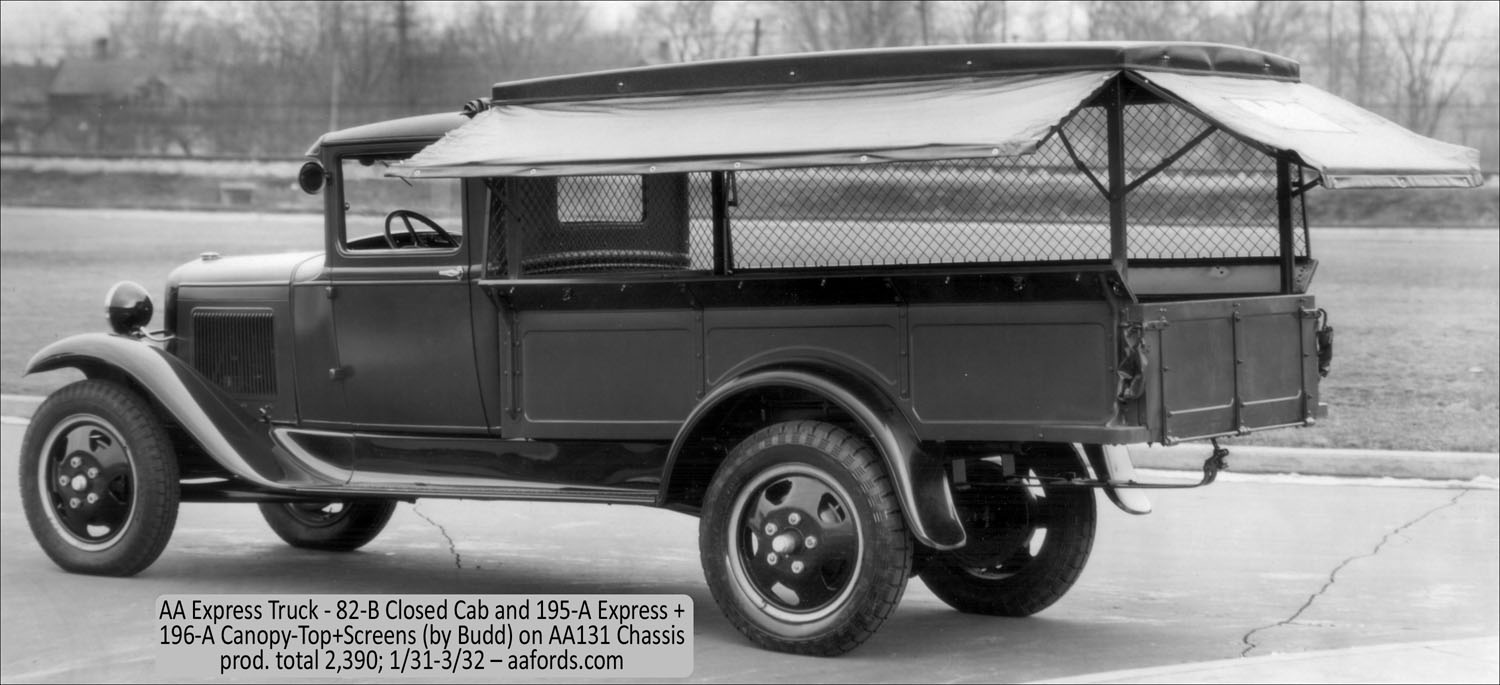
Period Ford photograph · Archive source
Canopy Express
195-A or 197-A with canopy equipment
An Express body fitted with a canopy; screen sides were also offered. The roof shades the load while retaining more open access than a closed panel body.
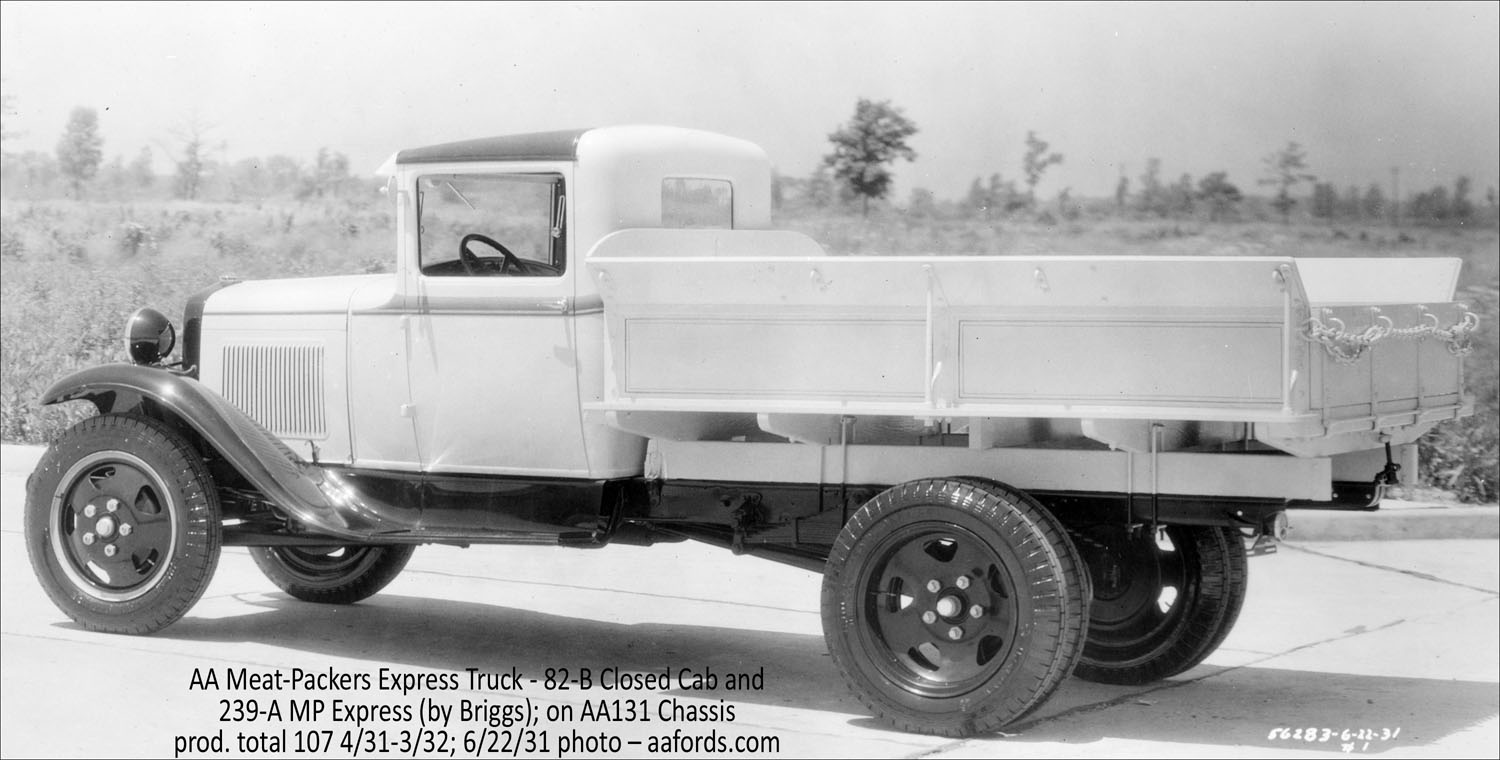
Period Ford photograph · Archive source
Meat-Packers Express
239-A
A specialized Express body for commercial meat hauling, with tall open framework above the cargo area. Its equipment differs from a basic low-sided Express body.
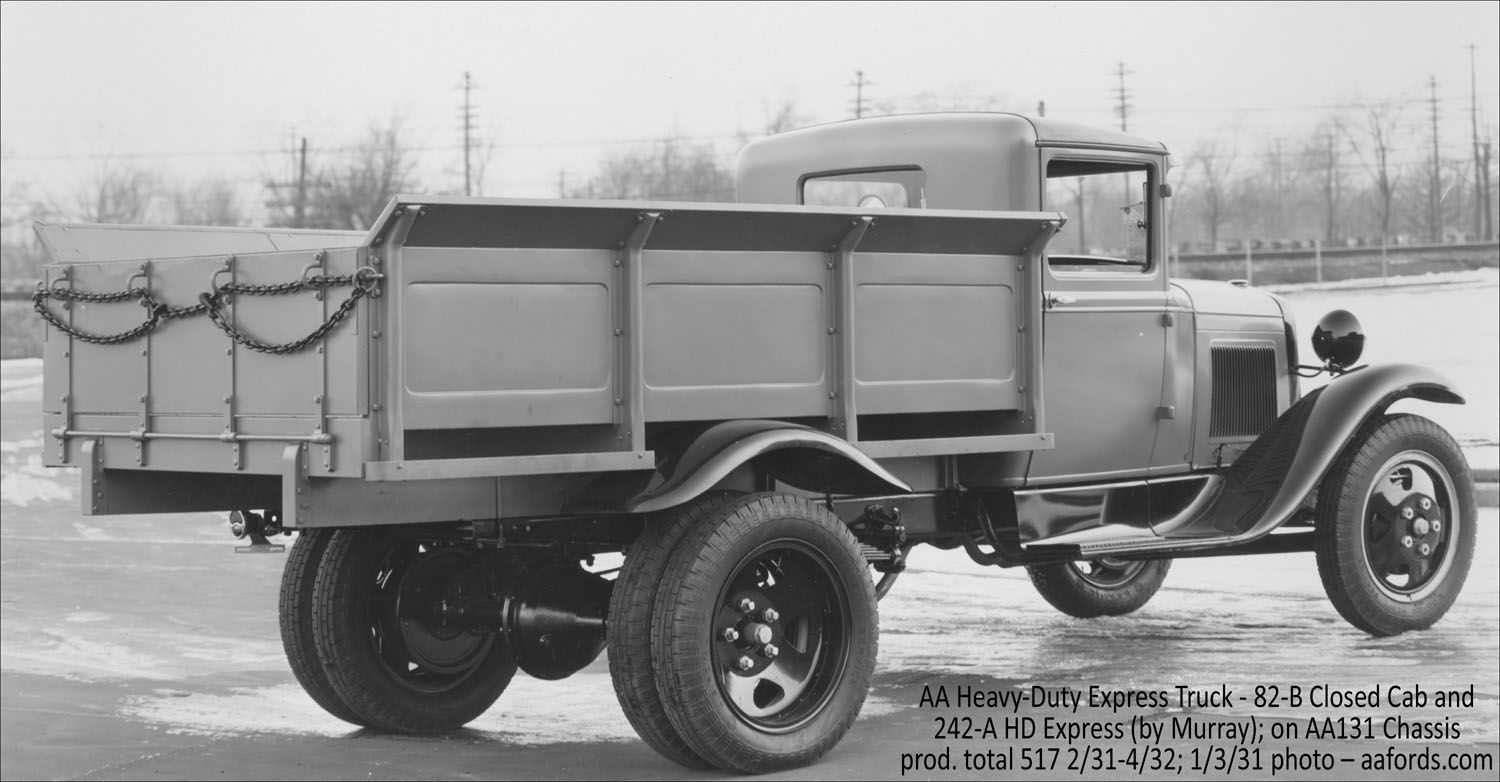
Period Ford photograph · Archive source
Heavy-Duty Express
242-A
A substantial high-sided Express body for heavier commercial loads. Its box construction and equipment distinguish it from the lighter pickup-like Express bodies.
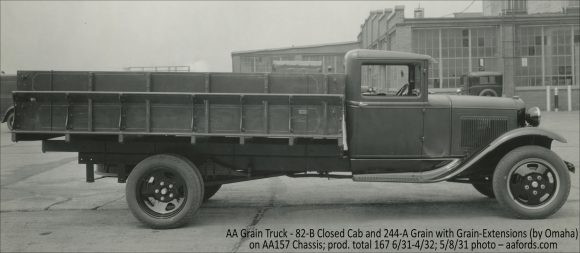
Period Ford photograph · Archive source
Grain Truck
244-A / 248-A
A wood cargo body with solid grain sides and flared upper boards. Optional extensions increased capacity for agricultural hauling.
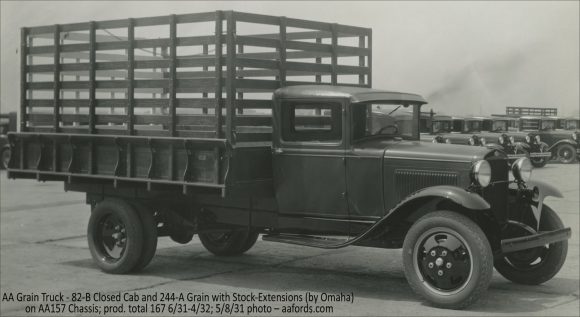
Period Ford photograph · Archive source
Stock / Livestock Truck
Grain body with stock extensions
Tall stock extensions form an open-sided livestock enclosure above the grain body. This is an equipment configuration rather than a wholly separate AA chassis.

Ford · Public domain · Photo details
Dump Truck
200 / 202 / 204 / 206 / 208 series
A tipping cargo body for unloading bulk material. Ford offered several suppliers and lifting arrangements, including hand, gravity, mechanical, and hydraulic systems.
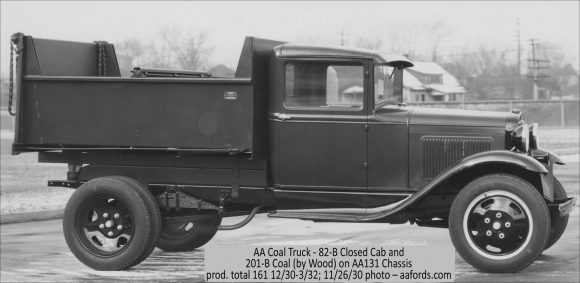
Period Ford photograph · Archive source
Coal Truck
201 / 205 / 207 series
A specialized bulk-hauling body for coal delivery. Body and hoist configurations included arrangements intended to discharge loads at different delivery heights.
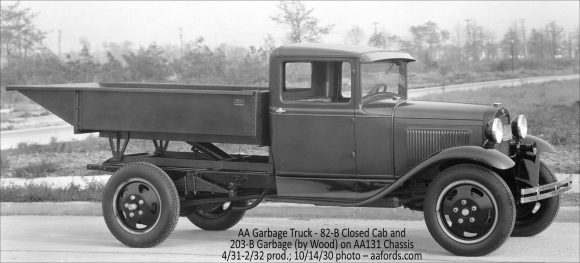
Period Ford photograph · Archive source
Garbage / Refuse Truck
203 series
An enclosed or covered refuse body for municipal collection. The body’s loading openings and tipping arrangement differ from those of an ordinary open dump truck.
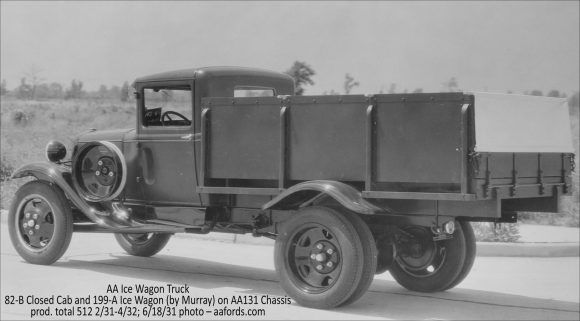
Period Ford photograph · Archive source
Ice Wagon
199-A
A dedicated commercial body for hauling and delivering ice. It belongs to the specialized AA work-body range rather than the passenger-car lineup.

Alf van Beem · CC0 · Photo details
Tank Truck
Special-purpose tank body
A cylindrical tank replaces the normal cargo box for transporting liquids. Tank equipment and body builders varied; the pictured tanker illustrates one period configuration.

Alf van Beem · CC0 · Photo details
Service Truck / Wrecker
229-A and other specialist equipment
A service body equipped for lifting or recovery work. The crane, boom, and storage arrangements make the working purpose immediately apparent.

Alf van Beem · CC0 · Photo details
Fire Engine / Fire-Service Body
Specialized body and firefighting equipment
Ford chassis carried pumpers and other fire-service bodies built to local requirements. Pumps, hose storage, ladders, and crew accommodation varied by builder.
Period Ford photograph · Archive source
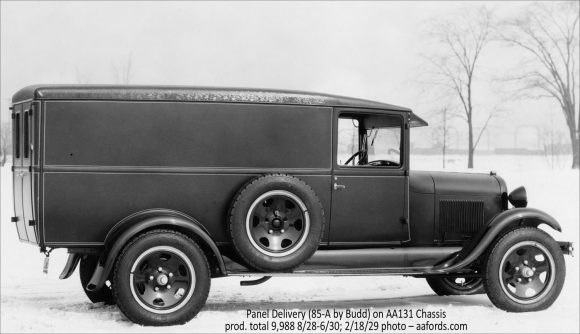
Panel Delivery
85-A / 85-B
An enclosed heavy delivery body. Early and later versions differ in construction and appearance.
Period Ford photograph · Archive source
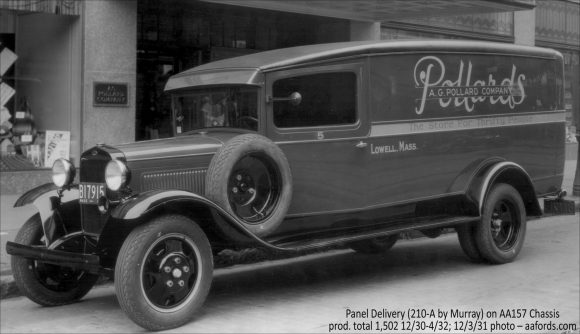
Long Panel Delivery
210-A
A longer enclosed cargo body on the AA157 chassis, with rear-door or tailgate arrangements.
Period Ford photograph · Archive source
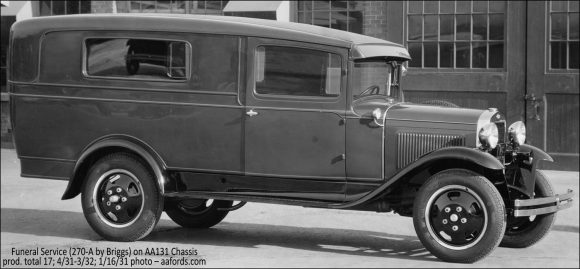
Funeral Service Vehicle
270-A
An enclosed service body for funeral-industry transport, distinct from the more formal Funeral Coach.
Period Ford photograph · Archive source
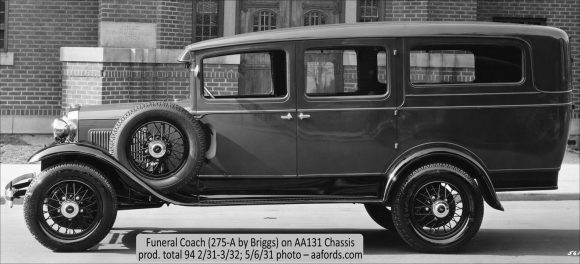
Funeral Coach
275-A
A formal enclosed funeral body with side-door access and a finished coach-like appearance.
Period Ford photograph · Archive source
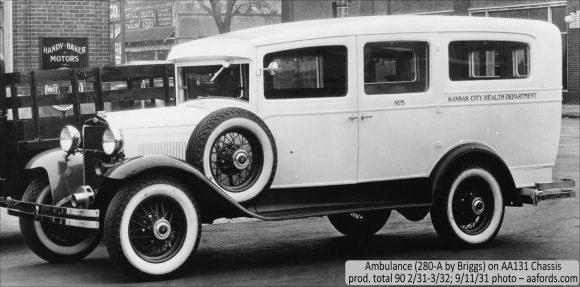
Ambulance
280-A
An enclosed patient-transport body with side doors and a dedicated rear compartment.
Period Ford photograph · Archive source
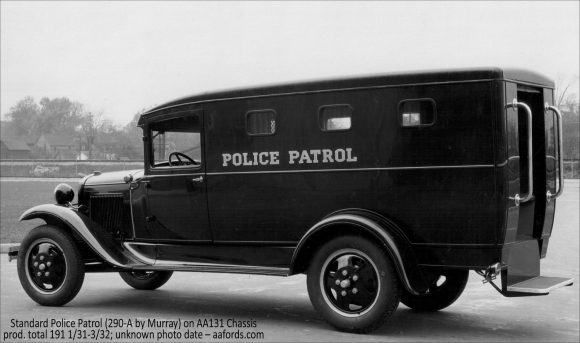
Police Patrol — Standard & Deluxe
290-A / 285-A
Police-service bodies combined a driver’s cab with an enclosed rear transport compartment. Standard and Deluxe versions differed.
Period Ford photograph · Archive source
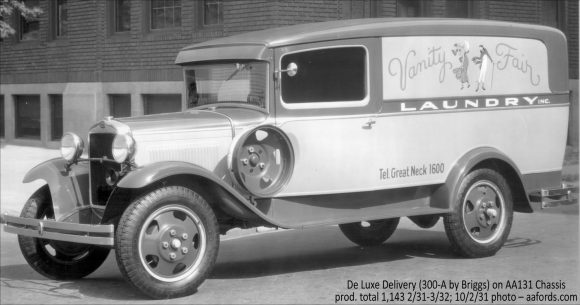
Deluxe Delivery
300-A
A finished heavy delivery body with rear doors or a tailgate, offered alongside the plainer panel bodies.
Period Ford photograph · Archive source
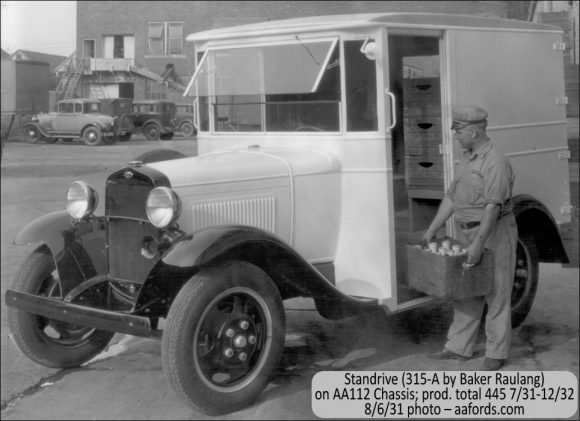
Standrive Delivery
315-A
A specialized delivery van designed around a standing driving position and frequent stops.
Period Ford photograph · Archive source
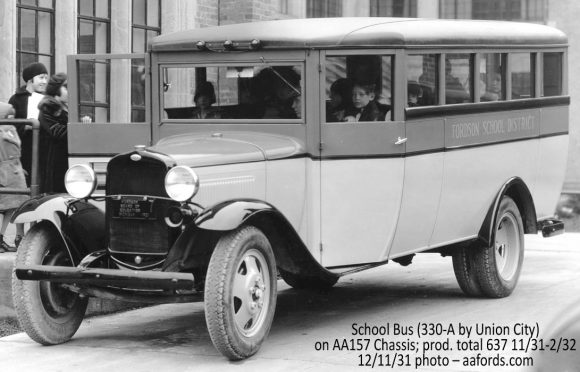
School Bus
330-A
A Union City-built passenger body arranged for school service on a Ford AA chassis.
Period Ford photograph · Archive source
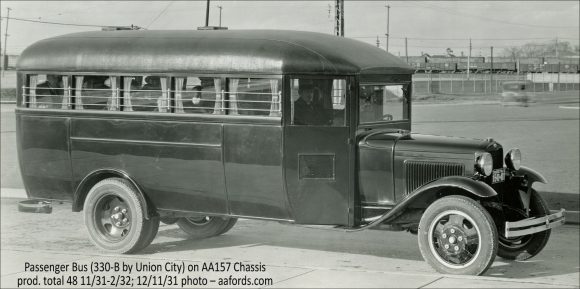
Passenger Bus
330-B
A Union City-built passenger-service bus body on the longer AA chassis.
References & Photo Credits
Descriptions are written for this club guide. Each photograph links to its source. Modern photographs retain the author and license shown below the image; period factory photographs are credited to their archive. Follow the source link for a larger view and further identification details.
- Model A Ford Club of Great Britain — body-type identification
- Model A Ford Garage — body numbers, builders, and year variations
- Model A Restorers Club — commercial factory data
- Model A Ford Foundation — Business Coupe
- AAFords — closed AA body types, open cargo bodies, and their individual galleries
- Model A Ford Foundation — AA bus history
- The Henry Ford — 1931 Deluxe Pickup
- MAFFI factory-photo collection
- Wikimedia Commons — individual photo sources and licenses